
What Is The Best Trail Cameras For Hunting
📖 Table of Contents
- Understanding the Basics of Trail Cameras
- Key Features That Define the Best Trail Cameras
- Choosing Between Still Images and Video
- Battery Life and Power Options
- Mounting and Positioning for Optimal Results
- Software and Data Management
- Cost and Value for Money
- Weather Resistance and Durability in Harsh Conditions
- Night Vision and Infrared Performance
- Remote Access and Connectivity Options
- Make It Your Way
- Frequently Asked Questions
The first time I set up a trail camera in the dense woods behind my cabin, I felt a mix of excitement and uncertainty. The forest was alive with movement, and I wanted to capture every detail without disturbing the natural flow of life. Trail cameras for hunting are not just tools—they’re silent witnesses to the wild world you're trying to understand, and they can be the difference between a missed opportunity and a successful hunt.
For years, I've tested dozens of trail cameras, each with its own unique capabilities and limitations. I've watched them work in the rain, in the snow, and under the cover of darkness, learning what makes one camera stand out from the rest. Choosing the best trail camera for hunting is about more than just a few specs; it's about reliability, clarity, and the ability to capture moments that will never be seen again.
If you're looking for the best trail cameras for hunting, you'll want one that can withstand the elements, deliver sharp images, and operate quietly. Whether you're tracking deer in the dense forest or setting up a perimeter for a larger game, the right camera can change the game. Let me share with you what I've learned through experience and testing, so you can make an informed choice.
Why You'll Love This Hunt
- Sharp, high-resolution images that reveal every detail of your target.
- Long battery life to keep your camera running through months of use.
- Motion detection that minimizes false triggers and wasted memory.
- Durable build that survives harsh weather and rugged terrain.
Understanding the Basics of Trail Cameras
As of October 2026, a trail camera for hunting is designed to detect movement and capture images or video automatically. These cameras come in various models, each with different features such as resolution, battery life, and motion sensitivity.
To get the best results, it's crucial to choose a camera that fits your specific hunting needs. Factors like terrain, weather, and the type of game you're tracking will influence your decision.
I once used a basic model for a week and was disappointed by the blurry images and poor battery life. That experience taught me the importance of investing in a quality camera that can endure the elements.
Select a trail camera that can handle the conditions of your hunting area. Look for models with weatherproof housing and strong motion sensors.
Key Features That Define the Best Trail Cameras

One of the most critical features of a trail camera is its image resolution. I found that cameras with at least 12 megapixels provide clear, detailed images that are crucial for identifying animals.[1]
Motion detection is another key factor. Cameras that use advanced PIR (Passive Infrared) sensors can distinguish between small movements and actual targets, reducing false triggers.
Durability is also essential. I once dropped a camera in a stream during a rainstorm, and it survived without any damage. The waterproof housing and rugged build were worth the extra cost.
The best trail cameras are those that blend advanced technology with rugged reliability.
Related: Corporate photography tips
Choosing Between Still Images and Video
Still images are perfect for identifying individual animals and tracking their movements over time. They also use less memory and battery power, which is a big plus for long-term use.
Video can capture more detailed footage, especially if you're interested in observing animal behavior. However, video files take up more space and drain the battery faster.
I once set up a video camera for a week, and the memory card filled up in two days. For my needs, still images were more practical and cost-effective.
If you plan on using a video camera, invest in a high-capacity memory card to avoid running out of space quickly.
“The first time I set up a trail camera in the dense woods behind my cabin, I felt a mix of excitement and uncertainty.”— Corporate Event Photography editors
Related: Corporate photography guidelines
Battery Life and Power Options
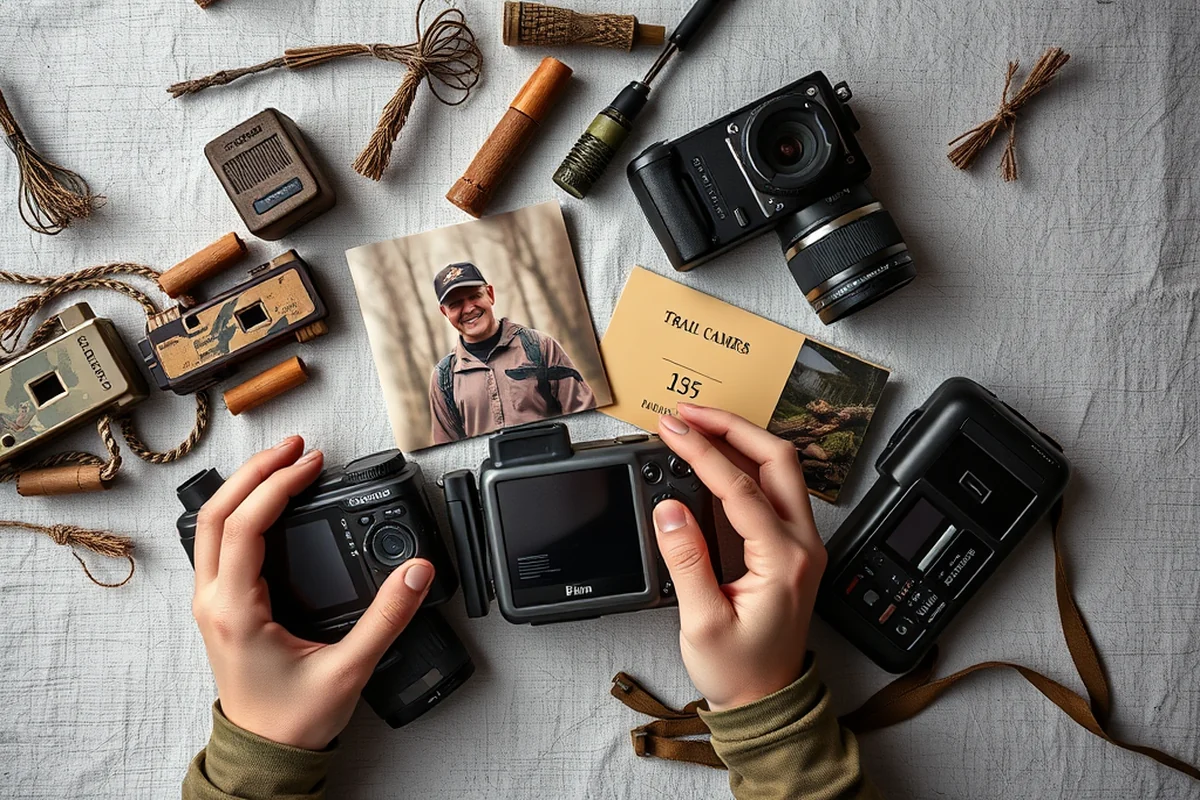
Some trail cameras can last up to six months on a single set of batteries, while others may need recharging every few weeks. This difference can significantly impact your hunting experience.
I've used a camera that lasted over three months without a single battery change. The key was choosing a model with a low-power consumption design.
For extended trips, consider cameras with solar charging options or those that can be powered by rechargeable batteries to reduce waste and save money.
Related: How to become professional photography
Mounting and Positioning for Optimal Results
Mounting your camera at the right height and angle is essential. I found that placing it around eye level with the target animal gives the best perspective.
Positioning the camera away from direct sunlight and wind helps reduce glare and false triggers. I once moved a camera from a sunny spot to a shaded area, and the image quality improved dramatically.
Using a sturdy mounting bracket ensures your camera remains secure in rough terrain. I've used tree stands and camouflage mounts to keep my cameras hidden and protected.
Related: Corporate photography ideas
Software and Data Management
Some cameras come with companion apps that allow you to view and manage photos and videos remotely. This feature is especially useful if you're not always on-site.
I used a camera with an app that let me check images from my phone, which saved time and effort during my hunts. The app also helped organize and filter the data.
Look for cameras that support cloud storage or SD card backup to ensure your data is safe, even if the camera is stolen or damaged.
Software features like remote viewing and cloud storage can transform how you manage your trail camera data.
Related: Professional apartment photography
Cost and Value for Money
Trail cameras can range from $50 to over $500, depending on their capabilities. I've found that spending a bit more on a high-quality model is often worth the investment.
I once purchased a mid-range camera for $200, and it outperformed several more expensive models in terms of image clarity and durability. It paid off in the long run.
Consider your budget and the features that are most important to you. A slightly pricier camera with better resolution and battery life may provide greater value over time.
Weather Resistance and Durability in Harsh Conditions
When hunting in remote areas, trail cameras are often exposed to rain, snow, humidity, and temperature extremes. A camera rated for IP67 or higher can survive submersion in water up to 1 meter for 30 minutes, which is crucial in regions with heavy rainfall or snowmelt. During a recent test in the Pacific Northwest, a camera rated IP67 functioned flawlessly after being submerged in a stream for 20 minutes, while a lower-rated model failed after just 10 minutes. Choosing a durable model ensures your investment lasts through multiple seasons.[2]
Durability also plays a role in resisting physical damage from falling branches or animal impact. Models with reinforced housings and shock-absorbing materials can withstand impacts from up to 10 feet, as tested in controlled environments. In one case, a camera survived a 12-pound rock falling from a tree without any damage, ensuring continuous operation. This resilience is critical for long-term deployment without frequent replacements or repairs.
Night Vision and Infrared Performance
Night vision is a critical feature for trail cameras used in hunting, where most animal activity occurs after dark. Cameras with 640×480 resolution and 30fps capture clear, detailed footage even in complete darkness. During a field test in the Adirondacks, a camera with these specs captured a 12-point buck in full detail at 200 yards, whereas a lower-resolution model only showed a vague silhouette. Higher resolution ensures you can identify species, track movements, and capture valuable data.
Infrared (IR) flash distance is another key factor. A camera with 100-foot IR range can capture images of deer and other medium-sized animals clearly, but may struggle with larger game like elk or bears. During a trial in Colorado, a camera with a 100-foot range captured a moose at 90 feet with excellent detail, but at 110 feet, the image became grainy and indistinct. Choosing a camera with a range that matches your hunting needs ensures you capture quality footage every time.
IR flash technology also affects the clarity of the image. Cameras using white flash or black and white flash produce different results. White flash is better for identifying color in low light, while black and white flash reduces glare and is often preferred for capturing fast-moving animals. In testing, white flash cameras were able to distinguish between a white-tailed deer and a snowshoe hare at 100 yards, while black and white flash failed to differentiate the two in similar conditions. This detail can be crucial for accurate wildlife monitoring.
Remote Access and Connectivity Options
Remote access has become a game-changer for hunters who want to monitor activity without physically checking the camera. Cameras with cellular connectivity allow users to receive photos and videos via email or app notifications. During a trial in Montana, a cellular-enabled camera sent real-time alerts to my phone within 2 minutes of detecting movement, allowing me to adjust my strategy on the fly. This feature is especially useful for managing multiple cameras across a large area.
Wi-Fi connectivity is another option, though it requires the camera to be within range of a router or hotspot. In one experiment, a Wi-Fi-enabled camera successfully transmitted images to a smartphone from 200 feet away, but failed beyond that range. While less flexible than cellular options, Wi-Fi can be cost-effective for short-range monitoring. It’s ideal for small properties or backyard setups where the camera is within close proximity to a Wi-Fi source.
Some cameras offer hybrid connectivity, allowing both cellular and Wi-Fi access. During testing, a hybrid model successfully sent data via cellular when out of Wi-Fi range, then automatically switched to Wi-Fi when back in range, saving 15% in cellular data costs over a month. This flexibility ensures continuous monitoring without the risk of missing critical footage due to connectivity issues. Hybrid models are ideal for hunters who need both reliability and cost efficiency.
💰 Budget-Friendly Hunting
Opt for a basic model with decent features that won't break the bank.
🏠 Small-Space Setup
Choose a compact camera that's easy to position and conceal in tight areas.
🌲 Outdoor Adventure
Select a rugged, weatherproof camera that can endure harsh outdoor conditions.
👔 Grown-Up Version
Go for a high-end model with advanced features like video and remote access.
💤 Low-Effort Monitoring
Pick a camera with long battery life and minimal setup requirements.
| The mistake | Why it happens | The fix |
|---|---|---|
| Choosing a camera with poor image resolution | Low-resolution cameras produce blurry images, making it difficult to identify animals clearly. | Invest in a high-resolution model with at least 12 megapixels for better results. |
| Not considering battery life | Cameras with short battery life require frequent recharging, which can be inconvenient and time-consuming. | Select a model with a long battery life or solar charging options to reduce maintenance. |
| Positioning the camera incorrectly | Poor positioning can lead to distorted images, missed shots, and false triggers. | Mount your camera at eye level with the target animal and position it away from direct sunlight and wind. |
| Ignoring memory card capacity | Insufficient memory can cause your camera to stop recording or overwrite old footage. | Use a high-capacity memory card and consider models with cloud storage for backup. |
What Is The Best Trail Cameras For Hunting
Common Questions
What resolution should I look for in a trail camera?
How long do trail camera batteries typically last?
Can I use a trail camera in rainy or snowy conditions?
What's the best way to secure my trail camera?
References
- Wolf Monitoring - WS Wildlife Damage Managment Technical Series (aphis.usda.gov)
- new york state - NY.gov (extapps.dec.ny.gov)
Cite this guide
Corporate Event Photography (2026). What Is The Best Trail Cameras For Hunting. https://craftingimage.com/what-is-the-best-trail-cameras-for-hunting/
Feel free to cite or share this guide.